
Peptide Storage Guidelines
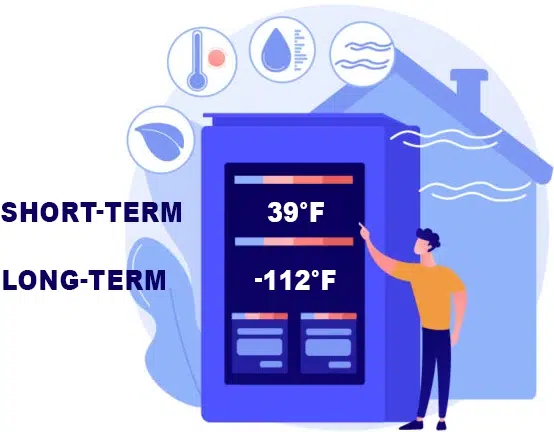
Peptide Storage Temperature Guide (°F & °C) | Stability & Best Practices
Learn the correct peptide storage temperature for short-term and long-term stability. This guide explains how to store peptides properly, avoid degradation, reduce oxidation, and maintain integrity for laboratory research applications.
Peptides must be stored at specific temperatures to maintain stability and prevent degradation. In general, lyophilized peptides are best stored at 4°C (39°F) for short-term use and at −80°C (−112°F) for long-term storage. Proper handling also requires protection from moisture, air exposure, repeated freeze–thaw cycles, and unnecessary light exposure.
What Temperature Should Peptides Be Stored At?
The ideal peptide storage temperature depends on the form of the material and the intended storage duration. Lyophilized peptides generally tolerate short-term refrigerated storage well, while long-term preservation typically requires an ultra-low temperature freezer.
| Storage Scenario | Recommended Temperature | Equivalent | Purpose |
|---|---|---|---|
| Short-term storage | 4°C | 39°F | Suitable for weeks to months when handled properly. |
| Long-term storage | −80°C | −112°F | Best for preserving peptide stability over months to years. |
| Room temperature | Ambient | Varies | Only appropriate for limited exposure; not ideal for extended storage. |
| Frost-free freezers | Not recommended | Not recommended | Temperature cycling may compromise peptide integrity. |
Short-Term Peptide Storage
For short-term handling over weeks to months, peptides are commonly stored under refrigeration at approximately 4°C (39°F). This helps reduce degradation while maintaining practical access for laboratory workflows.
- Keep vials tightly sealed.
- Protect materials from direct light.
- Store in a dry environment to limit moisture exposure.
- Allow cold vials to return to room temperature before opening to avoid condensation.
Long-Term Peptide Storage
For long-term preservation, peptides should generally be stored in an ultra-low freezer at −80°C (−112°F). This minimizes degradation risk and supports maximum stability across extended storage periods.
- Use aliquots to reduce repeated handling.
- Minimize unnecessary thawing.
- Avoid frost-free freezer systems due to temperature fluctuation.
- Keep storage containers airtight and chemically compatible.
How to Prevent Peptide Degradation
Peptide degradation can be accelerated by oxidation, hydrolysis, moisture contamination, and repeated freeze–thaw cycles. Good laboratory handling practices help preserve purity, stability, and consistency.
- Avoid repeated freeze–thaw cycles: aliquot material into smaller containers before long-term storage.
- Minimize air exposure: keep vials sealed whenever possible.
- Reduce moisture contact: open containers only after reaching room temperature.
- Protect from oxidation: inert gas storage may be beneficial where applicable.
- Limit light exposure: store in a dark environment whenever feasible.
Storage of Peptides in Solution
Peptides stored in solution typically have a shorter shelf life than lyophilized materials and may be more susceptible to hydrolysis, oxidation, or microbial degradation. For this reason, long-term storage in solution is generally less desirable.
- Use sterile research-grade buffers at pH 5–6 when solution storage is required.
- Aliquot peptide solutions to reduce repeated freeze–thaw cycles.
- Store at 4°C (39°F) for short-term use, such as up to approximately 30 days where appropriate.
- For longer preservation, freezing at −80°C is generally preferred.
Choosing the Right Peptide Storage Container
Container selection also affects peptide stability. Storage containers should be airtight, chemically resistant, and appropriate for the material and intended duration of storage.
- Glass vials provide excellent chemical inertness for extended storage.
- Polypropylene containers offer strong durability and handling convenience.
- Transport packaging may differ from ideal long-term storage packaging.
- If long-term preservation is planned, transferring to a more suitable container may be appropriate under controlled laboratory procedures.
Peptide Storage Best Practices Summary
- Store peptides in a cold, dry, and dark environment.
- Use 4°C (39°F) for short-term storage where appropriate.
- Use −80°C (−112°F) for long-term preservation.
- Avoid repeated freeze–thaw cycles by using aliquots.
- Minimize exposure to air, moisture, and light.
- Avoid long-term storage in solution when lyophilized storage is possible.
Research Peptides for Laboratory Use
Looking for high-quality research peptides handled through structured verification and fulfillment standards? Explore Regentide’s laboratory research catalog, including GLP-1 and other research compounds supplied with batch-level documentation and secure USA fulfillment.
Peptide Storage FAQ
What temperature should peptides be stored at?
Peptides are typically stored at 4°C (39°F) for short-term use and −80°C (−112°F) for long-term storage, depending on form and duration.
Can peptides be stored at room temperature?
Lyophilized peptides may tolerate limited room-temperature exposure, but prolonged ambient storage is generally not preferred when cold storage is available.
Why are freeze–thaw cycles bad for peptides?
Repeated thawing and refreezing can accelerate degradation and reduce stability. Aliquoting helps minimize this risk.
How should peptide solutions be stored?
Peptide solutions are typically less stable than lyophilized materials. Short-term refrigerated storage may be used where appropriate, while longer preservation generally favors freezing at ultra-low temperatures.
What is the best way to avoid oxidation and moisture contamination?
Keep vials sealed, allow cold containers to reach room temperature before opening, minimize air exposure, and maintain dry storage conditions whenever possible.
Research Use Compliance Notice
These storage recommendations are provided solely for laboratory, analytical, and in-vitro research applications. Regentide products are not approved for human or veterinary use and are intended exclusively for controlled scientific research conducted by qualified professionals.
All purchasers and handlers assume responsibility for lawful use, proper storage, and adherence to applicable research, laboratory, and safety standards.